
| About
Very Light Rail
Very Light Rail is the next generation of mass transport, offering a ground breaking transport system that can be delivered at a more cost-effective price than equivalent heavy rail alternatives.
The VLR Story.
Leading the way in Very Light Rail solutions
Transport Design International is at the forefront of lightweighting technology in the rail industry. We coined the original name ‘very light rail’ when we started working on our first lightweight self-propelled rail vehicle, which is now recognised as the rail industry standard description for lightweight rail cars. We are proud of our part in the story of very light rail and the expertise and knowledge that we have amassed over the years and brought to the sector.
Very Light Rail in the Rail Eco-system.
TDI has expanded our build capability (LMC) to deliver these vehicle programmes and we are currently in the process of scaling up capacity and developing the Rail Eco-system to support growth in this emerging sector.
VLR technology.
Lightweight
Lightweight vehicles dramatically reduce the strain on tracks and roads, making construction and maintenance far more affordable. This is why VLR systems are a smart choice for towns and cities seeking cost-effective transport solutions without heavy investment in complex infrastructure.
A lighter design means lower power requirements, which reduces energy consumption and makes battery technology easier to implement. VLR enables operators to deploy efficient battery solutions that are both eco-friendly and cost-effective. By combining reduced energy use with simpler infrastructure, VLR delivers a sustainable, future-ready transport option.
Modular Design
A modular approach allows VLR systems to adapt to different needs quickly and efficiently. With options for multiple interior configurations, operators can customize layouts for passenger comfort or maximize space for specific routes. This flexibility ensures that VLR can serve diverse communities without requiring entirely new vehicles for each purpose.
Modular design also supports multiple propulsion systems and even freight variants, making VLR a versatile solution for modern transport. By combining modular engineering with advanced digital technologies, infrastructure can be deployed rapidly and cost-effectively. This adaptability makes VLR an ideal choice for cities seeking scalable, future-ready transport solutions.
Battery Powered
A modular approach allows VLR systems to adapt to different needs quickly and efficiently. With options for multiple interior configurations, operators can customize layouts for passenger comfort or maximize space for specific routes. This flexibility ensures that VLR can serve diverse communities without requiring entirely new vehicles for each purpose.
Modular design also supports multiple propulsion systems and even freight variants, making VLR a versatile solution for modern transport. By combining modular engineering with advanced digital technologies, infrastructure can be deployed rapidly and cost-effectively. This adaptability makes VLR an ideal choice for cities seeking scalable, future-ready transport solutions.
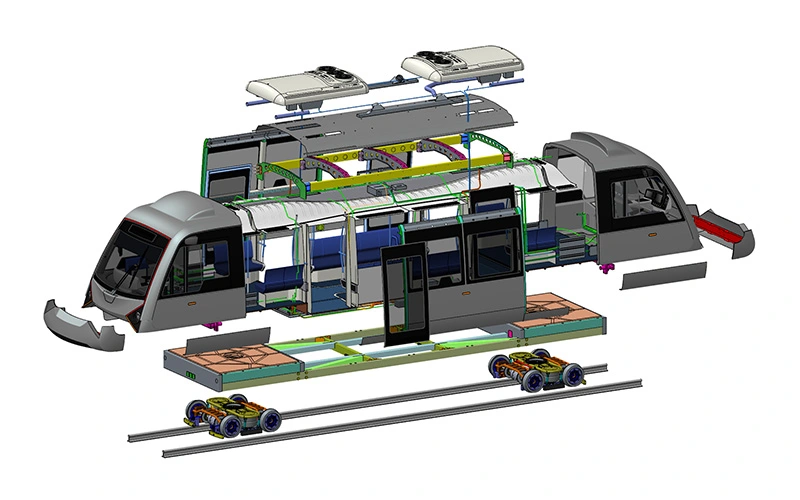
Lightweight Design Cuts Infrastructure Costs.
Lightweight vehicles dramatically reduce the strain on tracks and roads, making construction and maintenance far more affordable. This is why VLR systems are a smart choice for towns and cities seeking cost-effective transport solutions without heavy investment in complex infrastructure.
Lightweight Vehicles Drive Energy Efficiency.
A lighter design means lower power requirements, which reduces energy consumption and makes battery technology easier to implement. VLR enables operators to deploy efficient battery solutions that are both eco-friendly and cost-effective. By combining reduced energy use with simpler infrastructure, VLR delivers a sustainable, future-ready transport option.
Modular Design Brings Flexibility to VLR.
A modular approach allows VLR systems to adapt to different needs quickly and efficiently. With options for multiple interior configurations, operators can customize layouts for passenger comfort or maximize space for specific routes. This flexibility ensures that VLR can serve diverse communities without requiring entirely new vehicles for each purpose.
Rapid Deployment Through Modular Technology.
Modular design also supports multiple propulsion systems and even freight variants, making VLR a versatile solution for modern transport. By combining modular engineering with advanced digital technologies, infrastructure can be deployed rapidly and cost-effectively. This adaptability makes VLR an ideal choice for cities seeking scalable, future-ready transport solutions.
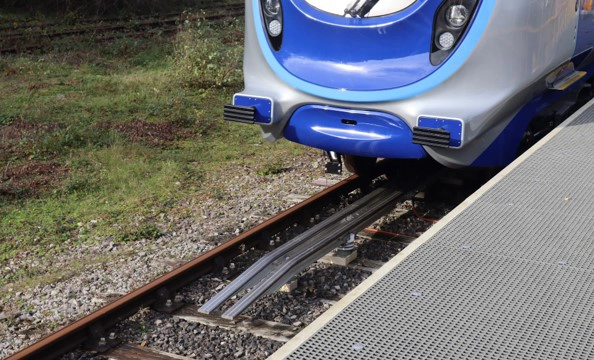
Driving Sustainability with VLR.
All-electric battery vehicles play a key role in meeting the UK’s 2040 transport goals and supporting net-zero targets across the UK, EU, and North America by 2050. VLR systems align perfectly with these objectives, offering a clean, efficient alternative to traditional transport solutions. By reducing emissions and energy consumption, VLR helps cities transition toward greener, future-ready networks.
Zero-Emission Operation and Smarter Infrastructure.
Leveraging proprietary battery technology and sustainable materials to deliver a truly zero-emission operation. Combined with VLR’s smaller, modular infrastructure, this approach minimises environmental impact by reducing the need for large tracks, platforms, and stations. The result is a cost-effective, eco-friendly solution that addresses urban challenges while promoting long-term economic sustainability.
 VLR Vehicles
Transport Solutions.
We have 3 product platforms for our very light rail (VLR) vehicles. They are all designed to operate on semi-segregated and segregated systems, utilising TDI's lightweight design approach and latest battery technology.
VLR vehicle suitable for new or existing rail lines
Revolution VLR
Efficient transport for urban environments
Lync VLR
Driver operated or automated last mile transport solution
Orbit VLR & PRT
Contact
For any further enquiries please get in touch.
E: info@tdi.uk.com
T: +44 (0)24 7527 1831
Interested in our VLR solutions?
Get in touch if you require any further information on our VLR solutions.